Thursday, April 26, 2012

PODCAST OF THE MONTH! TUNING IN TO SCIFI TV!

Podcast of the Month for April 2012 is:
 
Tuning in to SciFi TV


The following is from their "about the show" page on their web site:

In this podcast Wendy, Kevin and Brent will talk about many of the SciFi and genre shows that are currently on TV. We’ll also discuss good shows from the past as well.
Think of us as the viewer’s digest, tour guides or sherpas for the genre rather than critics.   We’ll always share our honest opinions but we also plan to keep things fun.
Since everyone has a different viewing pace we’ll structure our episodes into segments.
The Watercooler segment is where we have some general non-spoilery discussions about different things going on in the genre and other topics that we think you’ll find interesting.
The Back Porch is where we kick back and start talking details about certain shows or topics. This segment could be about any show, any episode or any plot line. We’ll be sure to tell you which shows we will be discussing in the show notes on our blog and also in the comments on the MP3 file so you can choose to skip that segment in case you’re not caught up on that TV show quite yet.
We do weekly Tuner Minutes where the crew comments on whatever is on their mind and invites listeners to share their thoughts in the forum or by dropping us a voicemail.
Most weeks we’ll also release a Last Call segment, which is a place where we just ramble about things we couldn’t fit into the regular show.


Wendy

Wendy Hembrock, Brent Barrett, and Kevin Bachelder are the three regular hosts and each of them has enough variations of personal taste that you get a nice balance of opinions on the various genre shows that are currently on the air. One of my favorite things about Tuning into SciFi TV is that they review all the new episodes of each week of Television every week! This is quite an accomplishment when you think of how many sci-fi, fantasy and horror shows are currently on broadcast, cable and premium cable TV.
Every regular episode starts with the The Watercooler segment in which the three hosts review every genre TV show and rate it with a simple comment of: watch it now, watch it soon, let it sit on the DVR or you can skip it. They cover all genre programs even including animated programs and fringe shows like Community. This segment isn’t very useful until you listen to the podcast for a while and get to know what the personal tastes of each host are. When you know what shows they love and what type of shows they dislike, then their simple rating system does help to judge the quality of individual episodes. One of the running gags of this segment is that Kevin doesn’t watch any animated shows and Brent and Wendy sometimes act in mock surprise when Kevin gives his obligatory “Not watching” for shows like Young Justice, Green Lantern and The  Avengers.
Brent
The middle segment of the show is a news piece. This part of the show is very loose and they not only cover different pieces of news that have come out in the past week, but they comment on interviews they’ve read, or other interesting promotional materials for their favorites shows that are currently airing. This segment also includes listener feedback and Wendy, Kevin and Brent always comment on the opinions of the listeners. This segment is also very spoiler sensitive; so whichever host is reading the news always warns the listener if they think something is spoilerific or not.
Last Call segment is uploaded as a separate episode and with good reason. They discuss in explicit detail specific episodes. If you haven’t yet watched the episode of the genre TV show that they are discussing, you don’t want to listen to Last Call. At the very  least you want to skip over the episodes that they discuss that you haven’t yet seen.
Kevin
If you love genre TV and watch as much of it as I do, you’ll love Tuning in to SciFi TV. Even if you only watch a few genre shows, Tuning in to SciFi TV is a good way of learning about shows that you may want to try out.
If you want to go to their web site and check out some of their podcasts, go to this link: http://tuningintoscifitv.com/

Tuesday, April 24, 2012

TRAILER TUESDAY! LOOPER – 2012 – TIME TRAVEL DONE RIGHT?


“In the year 2042, a mob hit man assassinates targets that arrive from the future of 2072. For him it's just a job... till he receives a new target: himself from the future.”

I’ve always liked time travel stories that deal with the paradox of meeting your future or past self. This new film from director-writer Rian Johnson looks like a fascinating blend of thoughtful drama and intense action. Johnson has previously directed and written Brick (2005) and The Brothers Bloom (2008). Neither of these is science fiction, but The Brothers Bloom, which I watched fairly recently, demonstrated Johnson’s ability to construct a complex plot with interesting characters, that uses both drama and humor effectively.


The casting of the movie is also exceptional! Joseph Gordon-Levitt plays Joe in the “past” and Bruce Willis plays Joe in the “future”. Emily Blunt, Piper Perabo, Paul Dano and the always brilliant Jeff Daniels round out the cast and are always a treat in any film they appear in.

Looper is coming to theaters September 28, 2012. Enjoy the trailer!


Monday, April 23, 2012

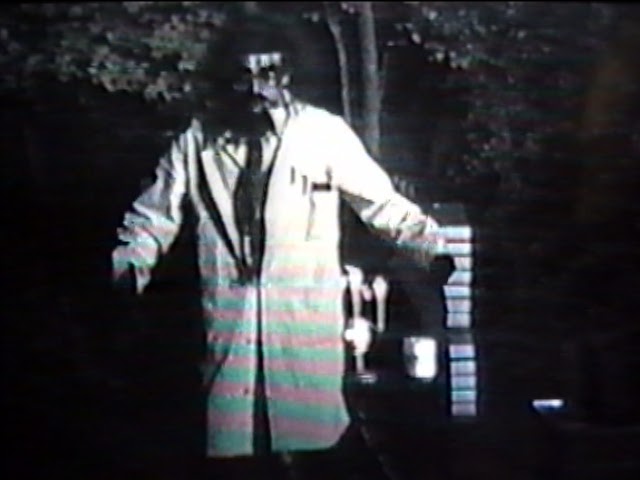
ZOMBZANY MEETS DOC FREAK - PART FIVE – FIT TO BE TIED AND ALL WRAPPED UP


In the fifth part of Zombzany Meets Doc Freak titled "Fit to be Tied and All Wrapped Up ", Zombzany is slumped in his throne in a coma-like state after drinking coffee that was spiked by “Doc” Freak with some type of poison. Freak is standing with Bill E. Bones before the insentient Necromancer and excitedly describing the next film in the horror movie marathon. Bones interrupts Freak and in a fit of megalomania, “Doc” Freak ties Bones up and lays him at the feet of his master. Freak continues to prattle on about the next film, not realizing that Myron the zombie cameraman has wisely gone to black.

We come back from the film and see that Freak has wrapped Bill E. Bones in toilet paper to demonstrate the ancient Egyptian art of mummification. While Freak once again jabbers on about the next mummy film, Bill attempts to tell Freak something important. Finally getting through to the power-mad Freak, Bill tells Freak that if Zombzany succumbs to true death from the poison, all the zombies that the Necromancer Supreme has created will once again become inanimate corpses. Realizing that he must find a way to resuscitate Zombzany, Freak reluctantly agrees to bring Zombzany out of his coma, but that he will need time to devise a plan. Freak asks Myron to go to black and then he and Bill go to work on how to bring Zombzany back to the Undead!

Enjoy, Zombzany Meets Doc Freak - Part Five – Fit to be Tied and All Wrapped Up.

Sunday, April 22, 2012

THE DARKEST HOUR – 2011 – AN ESCAPIST ALIEN INVASION


"There are many different elements of The Darkest Hour to enjoy! Foremost and most obvious are the marvelous locations that the film was shot on. I personally liked the design of the various alien technologies; which were all consistently based on light or energy. I really liked how Emile Hirsch’s character Sean grew from a shallow-seeming underachiever at the outset of the film into a quick-thinking selfless leader. Possibly the preeminent aspect of The Darkest Hour is its brisk pacing and efficient plot. Every scene provides pieces of information on the aliens, their purpose and the progression of the invasion."


Science Fiction, Horror and Action

Starring - Emile Hirsch/Sean, Olivia Thirlby/Natalie, Max Minghella/Ben, Rachael Taylor/Anne, Joel Kinnaman/Skyler, Gosha Kutsenko/Matvei, Veronika Ozerova/Vika, Dato Bakhtadze/Sergei, Nikolay Efremov/Sasha,  Pyotr Fyodorov/Anton Batkin, Georgiy Gromov/Boris, Artur Smolyaninov/Yuri and Anna Rudakova/Tess

Director - Chris Gorak
 
Writer - Jon Spaihts

Rated PG-13 - sci-fi action violence and some language.

1 hr, 29 min.


This film has been unfairly criticized for its unimaginative aliens and lack of characterization. The same could be said for any alien invasion movie ever made. The important thing about this gene of film is that the alien creatures look and act differently enough from the humans to pose a plausible threat; and that the characters are likable and relatable enough to want to see them survive the alien threat. The Darkest Hour succeeds in both respects.

Ben and Sean are two college friends, who decide to start a social networking business. Ben is the brains of the business and Sean is the face of the operation. They partner with a young Swedish businessman to enter the budding Russian free market. When Ben and Sean arrive to meet Skyler in Moscow, they find out that Skyler has already sold a knockoff version of their application software and due to the non-existent copyright laws in Russia, the friends can only drink away their woes at a local nightclub. They meet an American woman Natalie there and her Australian friend Anne, who are in Moscow to show Natalie’s art. The power abruptly goes out in the nightclub and everyone dashes out to see the sky filled with bright light, which quickly breaks off into hundreds of smaller spheres that plummet to the ground.

One of these light spheres alights near the crowd of young people outside the club and a police officer bravely confronts the alien object to intercede himself between the civilians and the possible threat. The police officer is immediately disintegrated against an invisible force barrier that surrounds the sphere, which sends the crowd running in a panic for the relative shelter of the club. More and more of the alien spheres hurtle ground ward and begin killing dozens of the frightened people. Sean finds a hole in the wall of the nightclub that leads to a basement storeroom and he leads Ben, Natalie and Anne there. Once behind the heavy steel door, they hear loud banging at the door and open it to reluctantly let Skyler in their shelter.

Hiding there for days, they finally leave to find that Moscow is completely devoid of people. Venturing further out into the city in search of a proper map, Ben and Sean become trapped by one of the alien spheres under a car. As it passes over the car, they notice that the sphere causes all the lights of the vehicle to alight and they quickly devise a warning system for the aliens out of incandescent light bulbs. They use the map from the car to find the American Embassy, where they had hoped to find help in finding a way back to America, but it is just as desolate and demolished as the rest of Moscow. They do find a logbook there near a wireless transmitter and discover that the alien invasion is a worldwide event. The group decides they need to find another way out of Moscow and they enter a high tower building to get a superior view of the city. Skyler is leery of being trapped in the building, so he stays on the ground floor while the others climb to the roof. They hear Skyler being attacked by one of the spheres, firing a rifle uselessly at the alien’s force shield. Skyler bravely leads the alien away from the rest of the group and they witness his death as they get away.

Sean, Ben, Natalie and Anne head towards a building with lights in the window, hoping to find someone alive. Once inside, they’re attacked by another alien sphere, but are helped by a Russian teenaged girl to escape into an apartment that has been transformed into a giant Faraday cage that hides them from the aliens. The girl introduces them to Mr. Sergei, who rescued Vika from the streets. Sergei explains to them that the aliens are generating an electrical field that not only makes them invisible, but also shields them from conventional weapons. Sergei then proudly demonstrates his microwave gun that destabilizes their shields enough to kill the aliens inside. They show Sergei a working radio they found at the embassy and play the frequency that repeats a message in Russian for him. Vika and Sergai interpret the message, which broadcasts that a nuclear submarine is waiting in the Moscow River to take refugees of the alien invasion to safety.

Sean, Ben, Natalie, along with the capable Vika escape Sergei’s building – which regrettably he and Anne do not – and are helped by a small but skilled Russian militia to find the Russian submarine promise of escape from the alien infested city of Moscow.

There are many different elements of The Darkest Hour to enjoy! Foremost and most obvious are the marvelous locations that the film was shot on. From the stunning exteriors of the Academy of Science Plaza to the impressive interiors of the Lenin Library, The Darkest Hour makes wonderful use of the city of Moscow to create a real feeling of alienation for the American and Australian protagonists in the film. The scenes of them wandering Red Square, which is shown to be completely devoid of any trace of humanity, are effectively eerie.

I personally liked the design of the various alien technologies; which were all consistently based on light or energy. The gigantic towering light funnels, that appear to be sucking the very life essence of Moscow itself, were disconcertingly efficacious. The opening sequence, where the massive vaporous light field in the night sky dissipates into hundreds of the energy spheres and begins at first to gently fall to the surface; only to quickly dive bomb the people on the ground and immediately disintegrate them, leaving only floating particles of dust was very imaginative and powerful. I thought that keeping the aliens themselves hidden behind the invisible energy shield for most of the film made them even more menacing than if they had been revealed early on in the movie. Because genre films and particularly science fiction films, portray alien technologies and biology with CGI so frequently now, I think our mind’s eye has become oversaturated with these images to the point that every films’ aliens begin to blend into one another. It is easy to criticize a lack of originality with the alien design work on The Darkest Hour, but honestly, when was the last film that truly impressed you with its innovative design work? Every film now is just a variation or modification of what we’ve seen in other science fiction films, so I think it’s just a cop out to disparage a film like The Darkest Hour for its lackluster special effects, when it is we as film aficionados that are being lazy in our critical analysis.

While I do think it might have been better if the central characters were more varied in age, ethnicity and vocation, I do think that the featured foursome were more than adequate at presenting the audience with relatable personalities and viewpoints. I really liked how Emile Hirsch’s character Sean grew from a shallow-seeming underachiever at the outset of the film into a quick-thinking selfless leader. I also appreciated that Olivia Thirlby’s character Natalie wasn’t just a bimbo to be rescued; nor was she throwing herself at Sean at every opportunity. In fact, at the beginning of the film she is more attracted to Ben because on the surface he seems to be the more stable and successful of the two male leads. Only after it becomes apparent to Natalie that Ben is actually very dependent on Sean for providing strength of leadership, that she – and we the audience – see Sean in a different light. My favorite characters in the film are some of the Russians; the foremost being Georgiy Gromov who played Boris the leader of the Russian militia. His obvious familiarity with American pop culture lent his character a real charm in relating to the Americans that he is put into a position to help. Boris demonstrates his appreciation for American films when after he and his small band of soldiers kill an alien he quips, “Welcome to Russia sucka!” I thought the young Russian actress Veronika Ozerova, who played the resourceful Russian refugee Vika, portrayed her character with just the right blend of quiet toughness and hidden terror that never once verged on overacting. Even with his relatively brief screen time, Dato Bakhtadze’s electrical engineer and amateur inventor Sergei was a fun and sympathetic character.

Possibly the preeminent aspect of The Darkest Hour is its brisk pacing and efficient plot. Every scene provides pieces of information on the aliens, their purpose and the progression of the invasion. These build on the each other, until the end of the film, which culminates with a satisfactory conclusion that still leaves open the possibility for a sequel. While, as a science fiction fan, I feel the film could have benefited from another character like Boris to better explain the alien technologies, I can’t quibble too much with the way this information was disseminated in bits and pieces throughout the film.

As you can no doubt tell by the length of this review, I truly enjoyed The Darkest Hour and recommend it to anyone who is looking for a pleasant bit of escapist alien-invasion science fiction!

TECHNICAL: Acting – 8 Directing – 8 Cinematography – 9 Script – 8 Special Effects – 9
VISCERAL: Visual – 9 Auditory – 8 Intellectual – 8 Emotional – 9 Involvement – 10
TOTAL RATING – 86


Wednesday, April 18, 2012

THE THING – 2011 – A PALE IMITATION OF THE REAL THING


"The biggest problem with this film is that there is no suspense because you know how the film must end before it even begins. What makes horror work is not knowing who is going to survive the antagonist, so this vital aspect of the plot is removed from The Thing. All we are left with is trying to identify with these characters and hoping that they will at least make an effort to survive that is interesting and exhilarating. For the most part, The Thing disappoints in this regard as well."

Science Fiction, Horror and Action

Starring - Mary Elizabeth Winstead/Kate Lloyd, Joel Edgerton/Sam Carter, Ulrich Thomsen/Dr. Sander Halvorson, Eric Christian Olsen/Adam Finch, Adewale Akinnuoye-Agbaje/Jameson, Paul Braunstein/Griggs, Trond Espen Seim/Edvard Wolner and Kim Bubbs/Juliette

Director - Matthijs van Heijningen Jr.

Writer - Eric Heisserer

Rated R - strong creature violence and gore, disturbing images, and language


The Thing is a prequel to the 1982 film of the same name. John Carpenter’s The Thing is considered to be a modern classic sci-fi horror film and when I saw it in the theater in June of 1982 I would have concurred with that assessment. I watched The Thing again last year in HD on Netflix in preparation of seeing the “prequel”, and it was not the film I remembered. While I still appreciated the nicely squeamish alien effects and the general feeling of isolation and growing paranoia that Carpenter generated in the film, the characters felt underdeveloped and the film just didn’t have the same emotional impact on me the way it did twenty-nine years prior. The more I read about the reverential approach that the director of The Thing prequel were taking to make their film, the more I became disinterested in seeing this Thing.


Trying to keep an open a mind as possible, I watched the blu-ray of The Thing and still found myself very underwhelmed. I just couldn’t help but think to myself why was this film even made? I actually could understand it better if they made a straight up remake. After all, the 1982 The Thing is a remake of the 1951 The Thing from Another World, both of which are liberal adaptations of the short story "Who Goes There?" by the science fiction editor/writer John W. Campbell Jr. There have already been two other science fiction novels that have been remade multiple times. The Body Snatchers, the 1955 science fiction novel by Jack Finney, was made into films in 1956, 1978, 1993 and 2007. I Am Legend, the 1954 Richard Matheson novel, was made into films in 1964, 1971 and 2007. Hollywood obviously has no shame when it comes to recycling the same stories over and over again, so why not another The Thing as well?

Instead, the writer became obsessed with telling the story of the Norwegian camp from the first film, as Heisserer explained in interviews that in writing the script it was necessary for him to research all the information that was revealed about the Norwegian camp from the first film, down to the smallest details, so that it could be incorporated into the prequel in order to create a consistent backstory. Considering that this backstory of the Norwegian’s is a complete fabrication of 1982 The Thing’s screenplay writer Bill Lancaster, I think by going even further away from the source material for inspiration to make an entire feature film is senseless. What makes this story even more uninspired is that it essentially tells exactly the same story as the 1982 The Thing, only with different characters!

The film opens with two of the Norwegian research team literally falling through the Antarctic ice onto the buried alien spaceship. An expedition goes looking for the missing men and finds instead the frozen body of a misshaped alien creature. Dr. Sander Halvorson, the head of the Norwegian team, recruits an American Paleontologist Kate Lloyd to help excavate and examine the alien body. Kate is flown to the Antarctic base by fellow Americans Carter, Derek and Griggs.


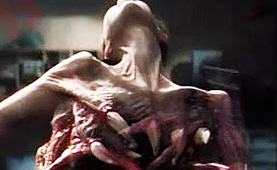
The alien is excavated from the ice, but left frozen in a block of it when brought into the camp. As the Norwegians drunkenly celebrate their find, Derek sees the alien inexplicably burst free of the ice and escape the building. The Norwegians and Americans split into small search parties and as soon as two of the Norwegians find it, it kills Henrik with Olav running away for help. The others return and use a flame thrower to burn the creature to death. Halvorson and Lloyd examine the remains and discover that the alien’s cells are still alive and are consuming and imitating Henrick’s cells.


The scientists devise a method of testing the blood to determine who the alien is imitating, but the lab is destroyed, so Lloyd devises another method to tell human from alien imitation. Despite their best efforts, one by one the humans are killed by the alien, leaving only a few left to keep the alien from contaminating the rest of the world.


One of the few interesting things about this Thing is the alien spacecraft. We see a glimpse of it in the beginning of the film, but the final act of the film makes use of it even better. Unfortunately, because this is a prequel, the events at the end of this film must not conflict with the beginning of the 1982 film and what could have been an interesting twist at the end is ruined. The biggest problem with this film is that there is no suspense because you know how the film must end before it even begins. What makes horror work is not knowing who is going to survive the antagonist, so this vital aspect of the plot is removed from The Thing. All we are left with is trying to identify with these characters and hoping that they will at least make an effort to survive that is interesting and exhilarating. For the most part, The Thing disappoints in this regard as well.


If some filmmaker in the next ten or fifteen years decides the time is right for another Thing film, I for one hope that they create their own original and fresh take on the film and not resort to slavishly imitating another filmmaker’s past glories.


TECHNICAL: Acting – 7 Directing – 7 Cinematography – 8 Script – 7 Special Effects – 8
VISCERAL: Visual – 8 Auditory – 8 Intellectual – 7 Emotional – 7 Involvement – 7
TOTAL RATING – 74